Today, Jennifer Riggins shared with me this article that she wrote.
Found at “Tide launched Raziel for AI security. It assumes hackers are inside.” on 2026-09-03T10:59:19+02:00.
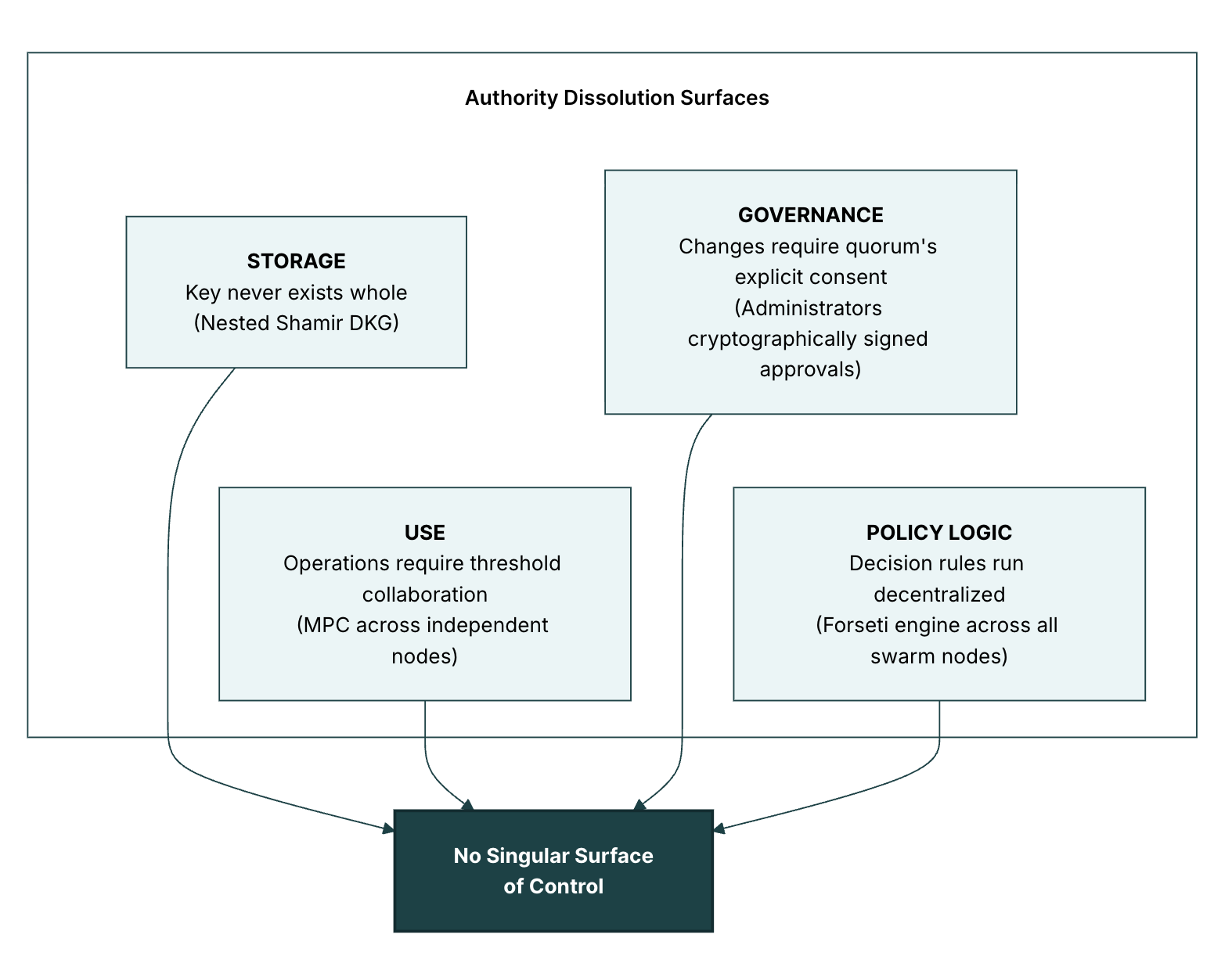
Tide’s answer is a model it calls “emergent authority.” Under it, authority isn’t permanently held by any person, system, administrator, or AI. Instead, it is generated only when identity, policy, context, and intent align — before it disappears again. Loewy and Waters spoke exclusively with The New Stack about what that means for developers.
I find it fascinating that they’re using Shamir Secret Sharing (SSS) as part of their “Ineffable Cryptography” solution.
This brings me back to January 2009, when I published “How to share a secret,” where I describe a similar solution using Shamir Secret Sharing applied to API keys (at the time I called them Web Services):
If each Web Service is given access to a copy of the credential, the system will be very easy to misuse. A possible solution is to divide a secret that can later on decrypt the credential – I’m not getting into details about this process right now – into different tokens that are spread across all the Web Services involved in the process.